Li Felicia Feng

Profile Picture

Hi there! I am a PhD student at the University of Waterloo, under the supervision of Dr. Ana Crisan and Dr. Jian Zhao. Before that, I obtained my master's degree from HKUST and my bachelor's degree from CityU HK.

My research interests are building interactive interfaces and empirically understanding the design space of multi-directional human-AI team collaboration. I aim to bridge the gap between end-user group intentions and AI-generated content, with the goal of enhancing controllability and transparency in collaborations.

Latest News

2026.8
IntentLint Accepted by UIST26!
2022-2024
Master at HKUST
2024.1
CoPrompt and See Widely, Think Wisely Accepted by CHI24!
2023.1
CoPractTer and StoryChat Accepted by CHI23!
2018-2022
Bachelor at CityU HK

Publications

UIST 2026

Paper Image Preview

IntentLint: Supporting Intent Scaffolding and Prompt-time Linting in Human-AI Collaborative Data Analysis [pdf] [video]

Li Feng, Jian Zhao, Anamaria Crisan

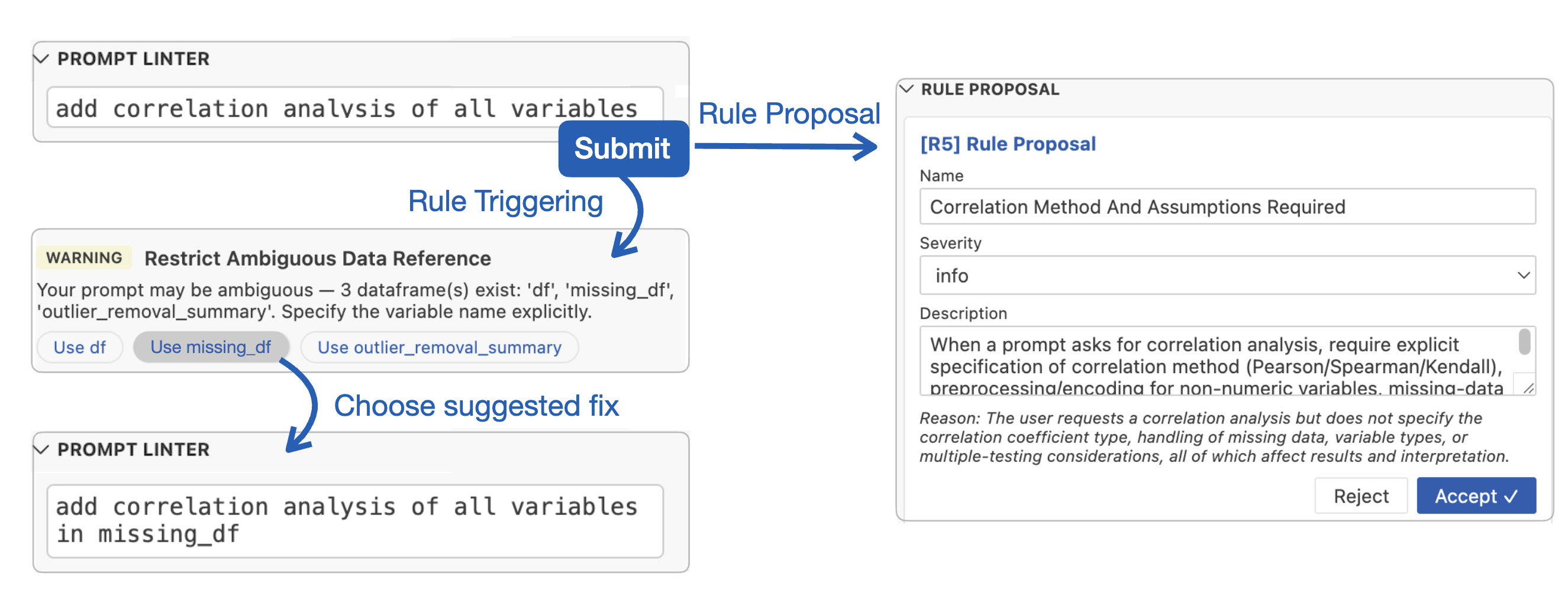
A rule-based coordination layer with two interaction mechanisms, intent scaffolding and prompt-time linting, that make analytic intent explicit and actionable during human-AI collaborative data analysis.

CHI 2024

Paper Image Preview

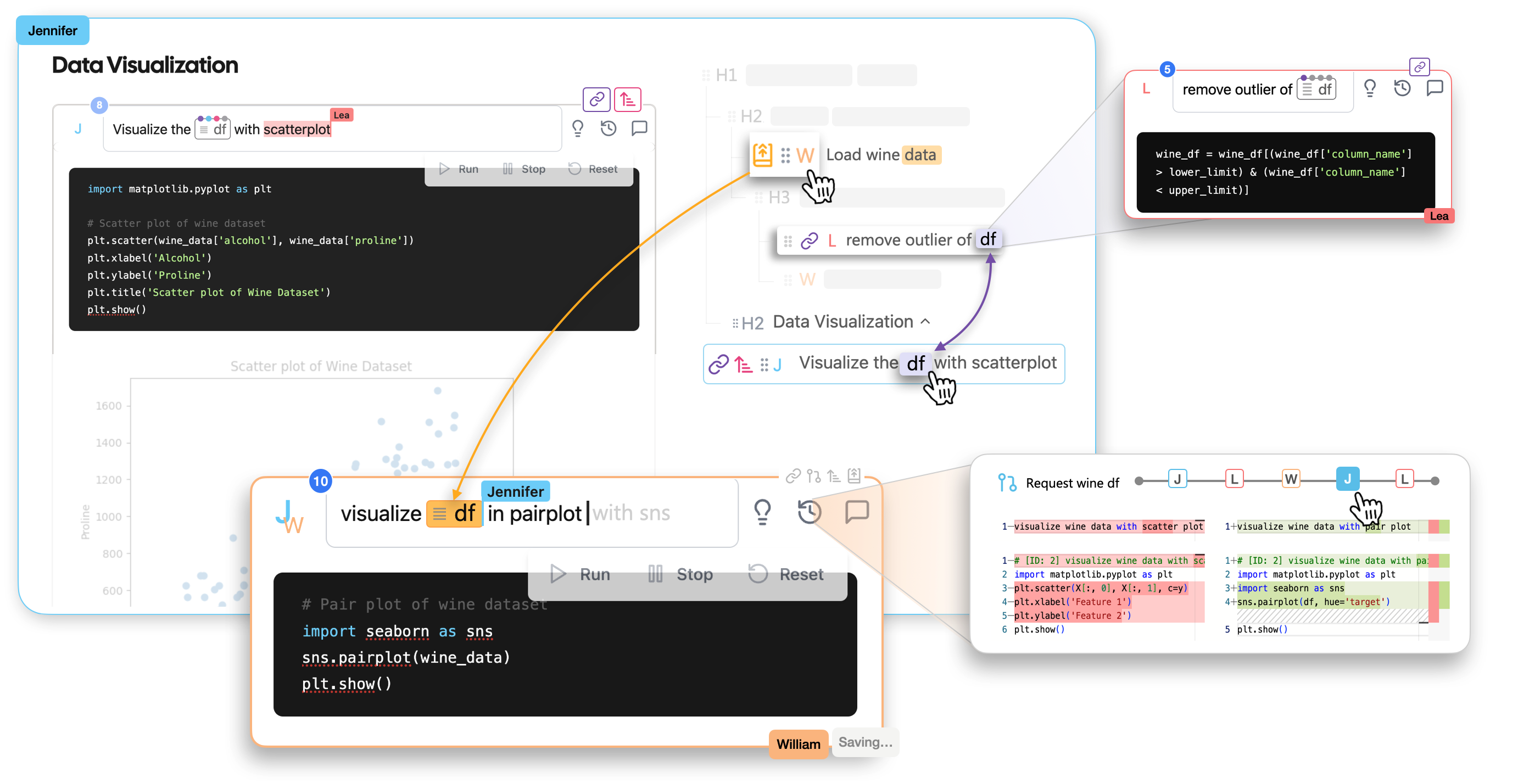
CoPrompt: Supporting Prompt Sharing and Referring in Collaborative Natural Language Programming [pdf] [video]

Li Feng*, Ryan Yen*, Yuzhe You, Mingming Fan, Jian Zhao, Zhicong Lu

*These authors contributed equally to this work.

A system to support collaborative prompt engineering by providing referring, requesting, sharing, and linking mechanisms. It assists programmers in comprehending collaborators' prompts and building on their collaborators' work, reducing repetitive updates and communication costs.

CHI 2024

Paper Image Preview

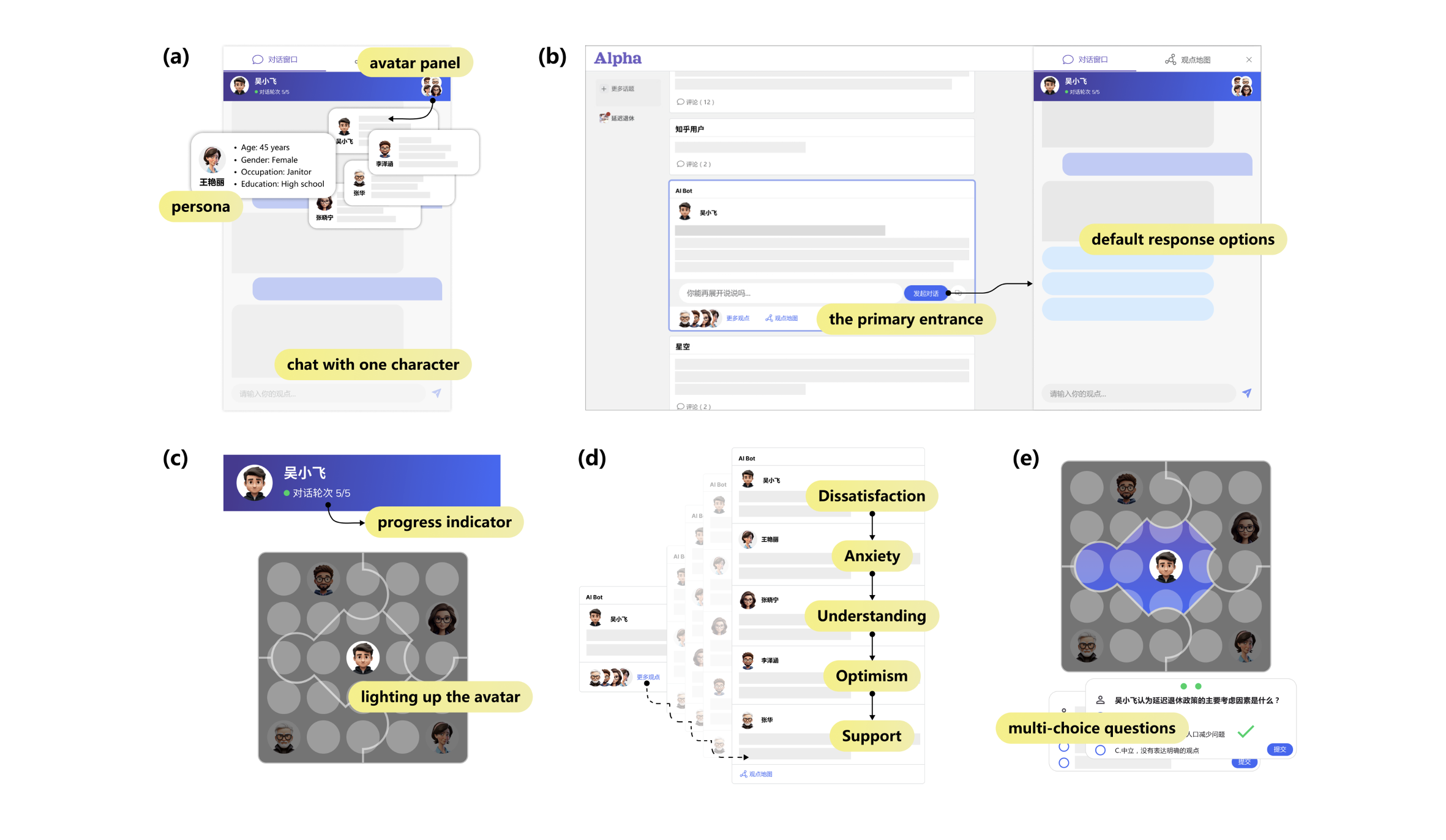
See Widely, Think Wisely: Toward Designing a Generative Multi-agent System to Burst Filter Bubbles [pdf] [video]

Yu Zhang, Jingwei Sun, Li Feng, Cen Yao, Mingming Fan, Liuxin Zhang, Qianying Wang, Xin Geng, Yong Rui

We took a human-centered approach to explore how Large Language Models (LLMs) could assist users in embracing more diverse perspectives.

UIST 2023 Demo

Paper Image Preview

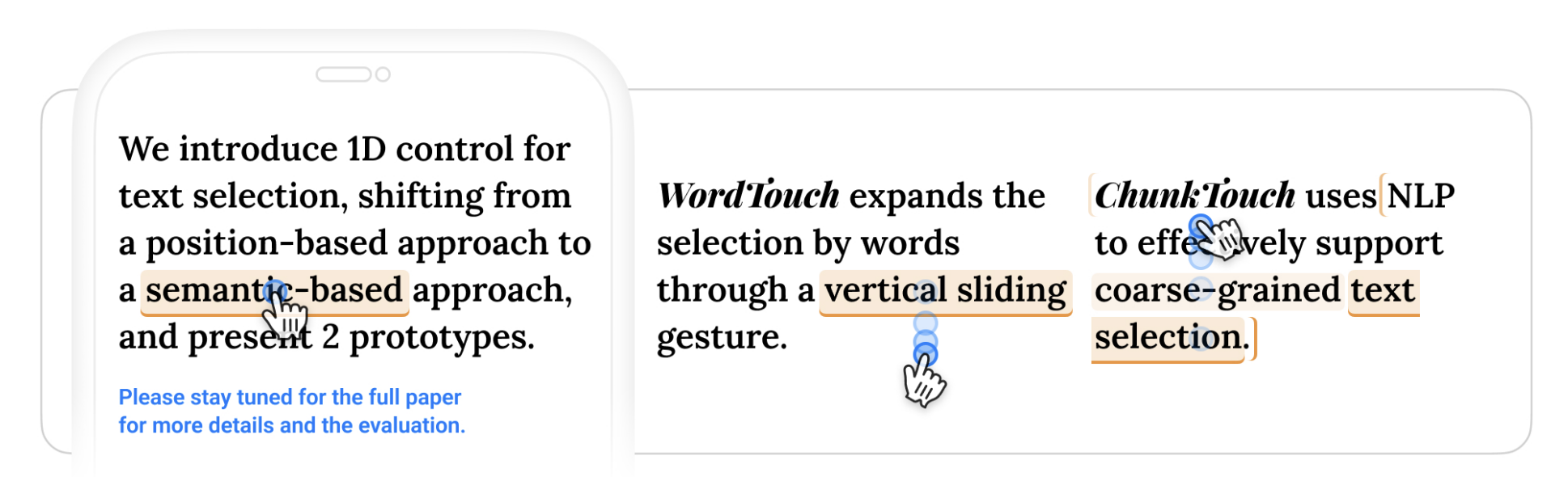
Demonstrating 1D-Touch: NLP-Assisted Coarse Text Selection via a Semi-Direct Gesture [pdf] [video]

Peiling Jiang, Li Feng, Fuling Sun, Haijun Xia, Can Liu

A novel text selection method that complements the carets-based sub-word selection by facilitating the selection of words and larger semantic units. 

CHI 2023

Paper Image Preview

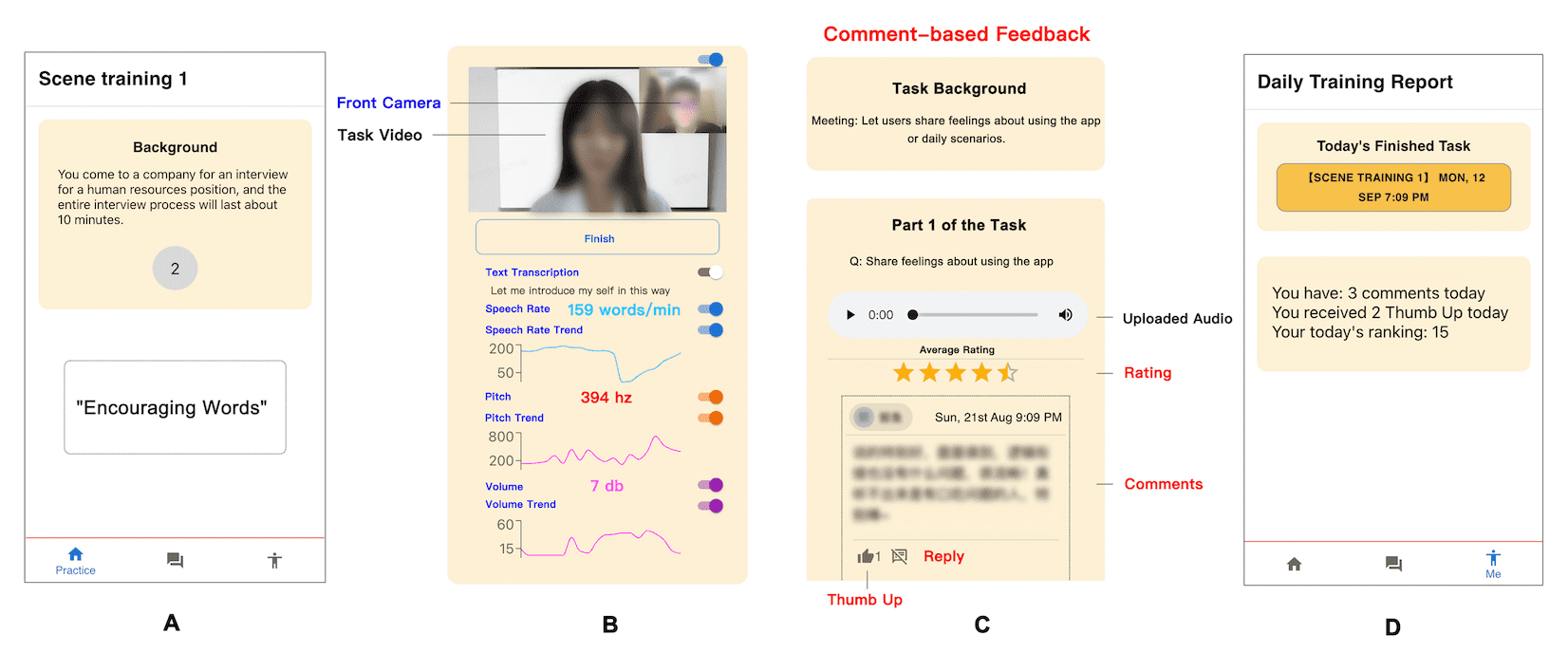
CoPracTter: Toward Integrating Personalized Practice Scenarios, Timely Feedback and Social Support into An Online Support Tool for Coping with Stutering in China [pdf] [video]

Li Feng, Zeyu Xiong, Xinyi Li, Mingming Fan

An online tool to support Chinese PwS practicing speaking fuency with 1) targeted stress- inducing practice scenarios, 2) real-time speech indicators, and 3) personalized timely feedback from the community.

CHI 2023

Paper Image Preview

StoryChat: Designing a Narrative-Based Viewer Participation Tool for Live Streaming Chatrooms [pdf] [video]

Ryan Yen, Li Feng , Brinda Mehra, Ching Christie Pang, Siying Hu, Zhicong Lu

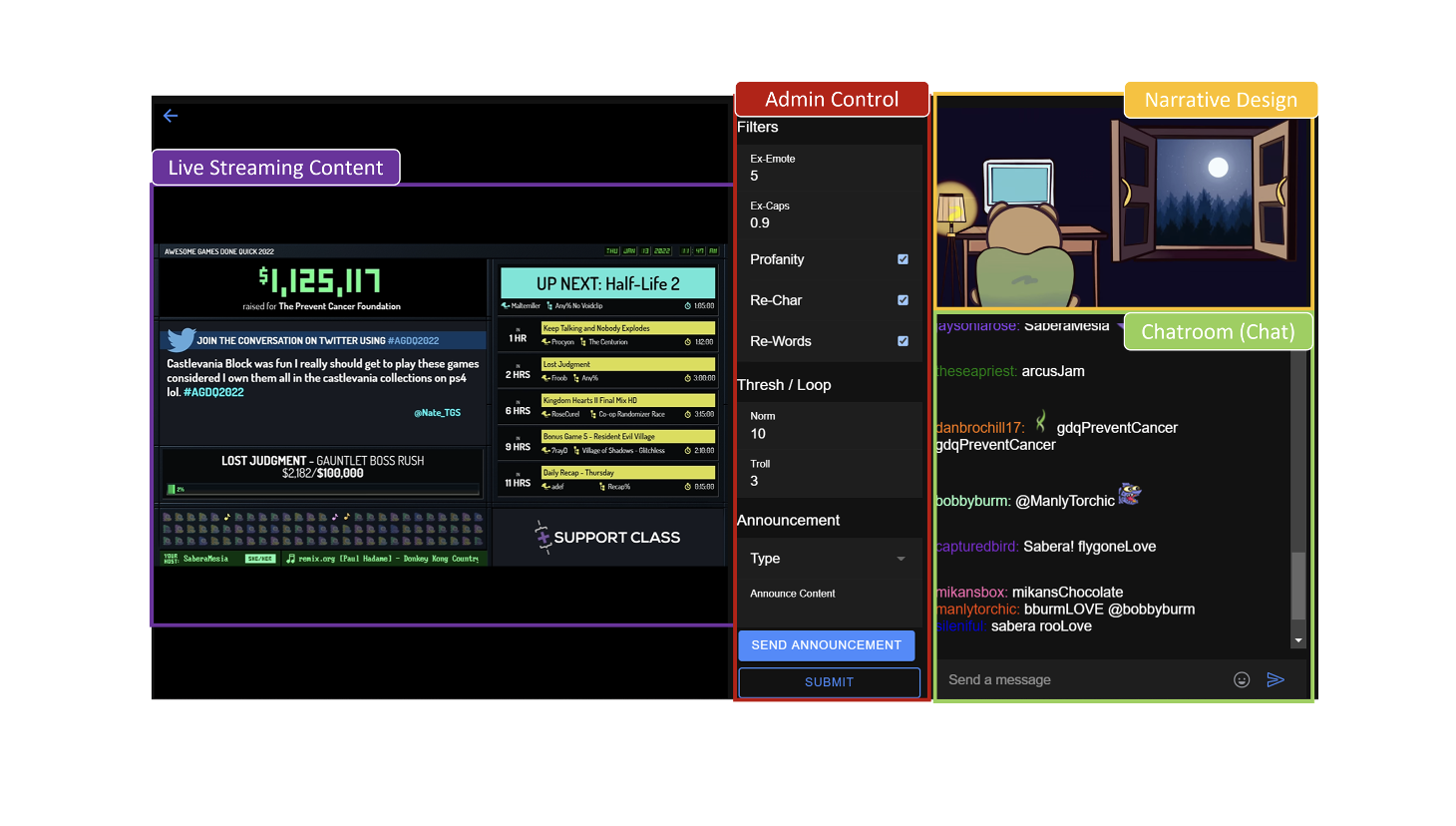
A narrative-based viewer participation tool that utilizes a dynamic graphical plot to reflect chatroom negativity. We discovered that StoryChat encouraged viewers to contribute prosocial comments, increased viewer engagement, and fostered viewers' sense of community.

Ubicomp 2023

Paper Image Preview

Exploring The Opportunities of AR for Enriching Storytelling With Family Photos Among Grandparents and Grandchildren [pdf] [video]

Zisu Li, Li Feng, Chen Liang, Yuru Huang, Mingming Fan

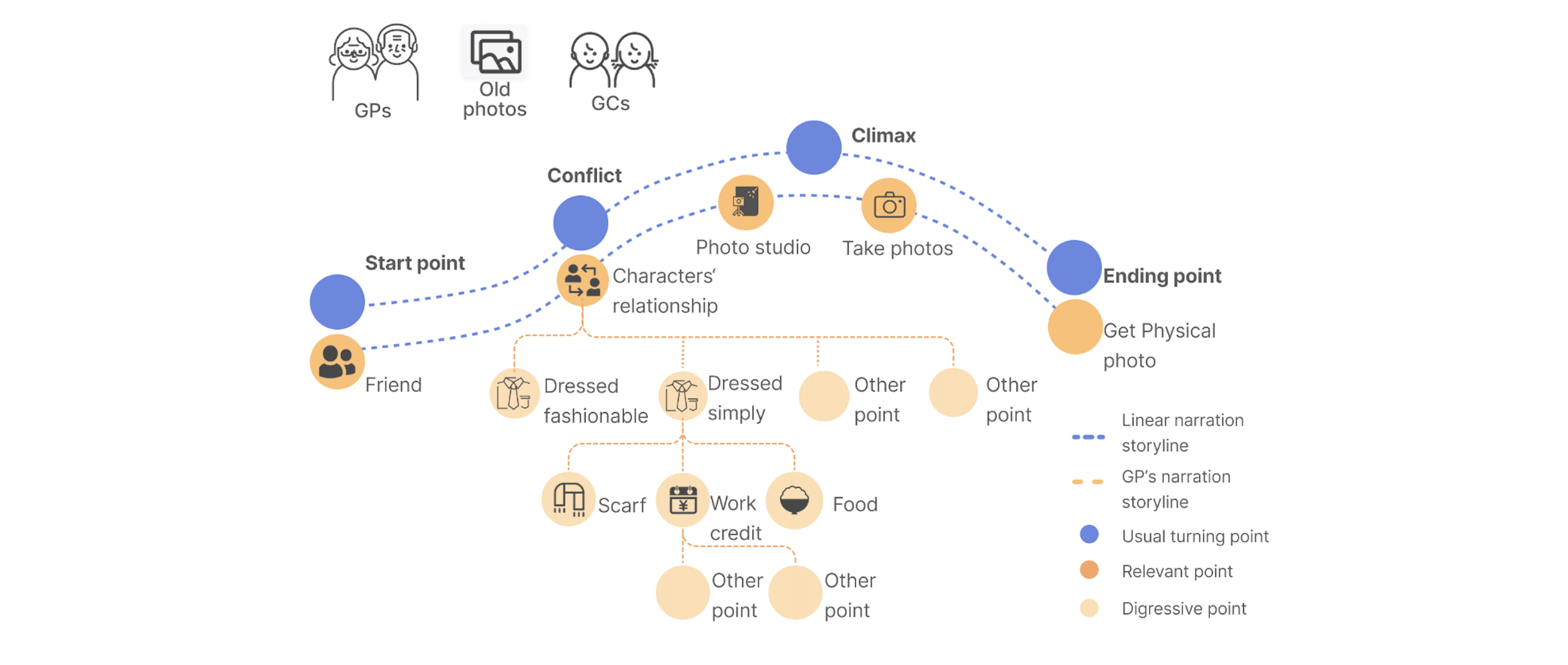
This work identified the opportunities in photo-based intergenerational storytelling and highlighted design implications for promoting intergenerational social interaction through AR-based storytelling.

CSCW 2022

Paper Image Preview

Typist Experiment: an Investigation of Human-to-Human Dictation via Role-play to Inform Voice-based Text Authoring [pdf] [video]

Can Liu, Siying Hu, Li Feng, Mingming Fan

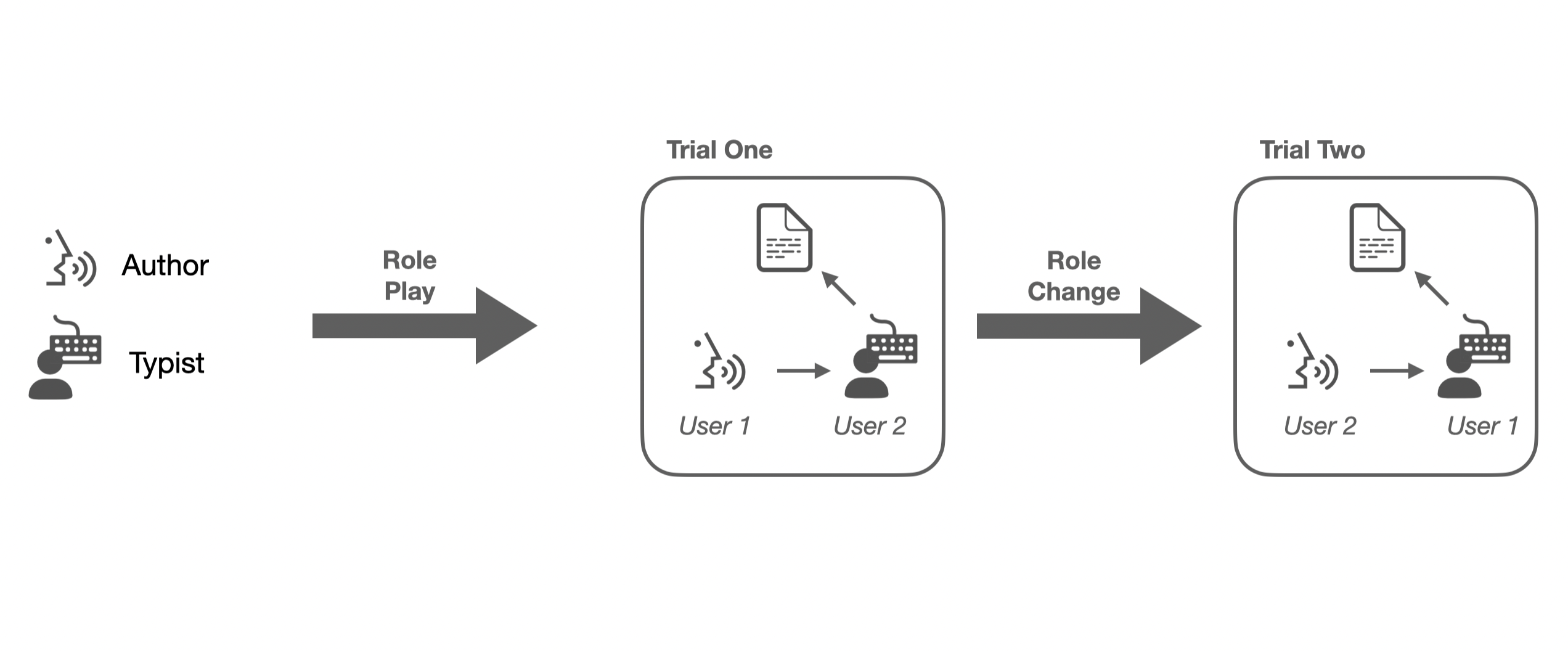
By analysing the natural language patterns of both authors and typists, we identified new challenges and opportunities for the design of future dictation interfaces, including the ambiguity of human dictation, the differences between audio-only and with screen, and various passive and active assistance that can potentially be provided by future systems.